The right mattress solution can dramatically reduce pressure on vulnerable areas, improve circulation, and promote better sleep for those dealing with bed sores or prolonged time in bed. This guide highlights five top-performing options with proven pressure-relief technology, from alternating air pressure systems to memory foam toppers. Each product focuses on distributing weight evenly, reducing friction, and offering customizable firmness. Read on to compare features, find practical differences, and choose a mattress solution suited to home care or clinical settings.
| Product | Brand | Key Benefit |
|---|---|---|
| Lunderg Queen Size Alternating Air Pressure Mattress Pad with Static Mode | Lunderg | Queen size, static mode, quiet pump |
| Lunderg Alternating Air Pressure Mattress Pad with Static Mode & Flocking | Lunderg | Flocking surface, bed sore prevention |
| Medical King Alternating Air Pressure Mattress Pad | Medical king | 130 air cells, silent operation |
| Alcedo Alternating Air Pressure Mattress Pad | Alcedo | Breathable, waterproof surface |
| Drive Medical Med-Aire Low Air Loss Mattress | Drive Medical | Pressure redistribution, moisture-wicking cover |
Lunderg Queen Size Alternating Air Pressure Mattress Pad
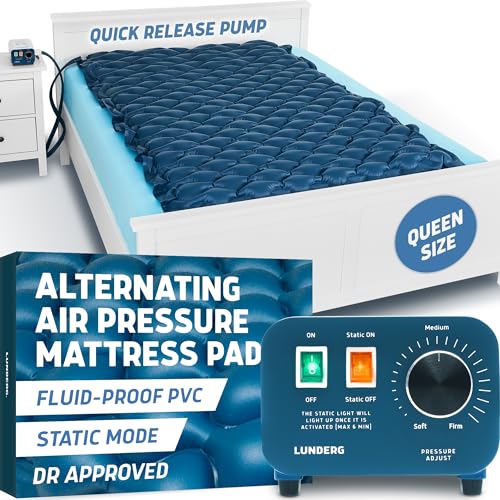
Designed for bed sore prevention and long-term care at home or facilities, this Lunderg Queen air mattress helps relieve pressure on skin and bony areas while boosting circulation. The product is developed by medical experts to support faster healing and reduce turning. It includes a quiet pump with a Static Mode option, allowing you to maintain a fully inflated surface without continuous cycling when needed. This combination provides adaptable comfort for different care scenarios and user needs.
Lunderg Alternating Air Pressure Mattress Pad with Static Mode & Flocking

This model combines alternating air pressure therapy with a patented flocking surface for a breathable, fabric-like feel that stays cooler and more comfortable than vinyl pads. The static mode lets caregivers switch off the cycling while maintaining full cell inflation, which can help reduce movement-related discomfort at night. It’s particularly suitable for patients who sweat easily or require a softer, more natural surface while resting.
Alternating Air Pressure Mattress Pad with Electric Quiet Pump System

With 130 air cells and a whisper-quiet pump, this Medical King pad delivers a therapeutic cycle every 10–12 minutes to promote circulation and reduce back pressure. Five adjustable pressure levels enable customization to user needs, making it suitable for a range of conditions from acute care to home use. The system’s design focuses on minimizing moisture buildup and skin friction, supporting skin integrity during extended bed rest.
Alcedo Alternating Air Pressure Mattress Pad

Alcedo’s model emphasizes medical-grade quality and a breathable, waterproof surface. It distributes pressure through alternating cycles to prevent bedsores, while the durable construction supports up to 300 pounds. The design is compatible with hospital or home use, and the waterproof surface helps maintain a clean, easy-to-clean sleeping environment, an important consideration for long-term care.
Drive Medical Med-Aire Low Air Loss Mattress

This system provides targeted pressure redistribution with a compact design and a breathable, moisture-wicking cover. It uses a set of replaceable bladders to tailor support, reducing skin friction and heat buildup. The low air loss technology helps maintain skin integrity for patients who are bedridden, post-operative, or require extended care in homes or facilities.
Buying Guide
Key considerations when choosing a pressure-point mattress include surface type, mobility needs, care setting, and user comfort. Alternating air pressure mattresses are effective for distributing weight and promoting blood flow, but some users benefit from a Static Mode option to reduce movement during sleep. Surface materials matter: flocked, breathable fabrics feel cooler and softer than vinyl, while waterproof and easy-to-clean covers support hygiene in care environments. Consider bed size compatibility, weight capacity, and whether a topper (such as gel memory foam) might complement a base mattress to increase comfort and reduce pressure in vulnerable areas. Noise level, pump quietness, and ease of setup also influence user satisfaction in both home and clinical settings. For multi-user scenarios, durability and maintenance requirements become important factors to minimize downtime. Finally, consult healthcare providers to align the selection with specific pressure-relief needs and care plans.