Choosing the right mattress or topper is essential for preventing and relieving bed sores in bedridden or recovering patients. The following selections emphasize alternating pressure technology, quiet pumps, and durable covers to help manage skin breakdown, boost circulation, and support comfortable sleep. Below you’ll find five top options with quick specs and practical considerations to guide your decision.
Summary of Selected Products
| Product | Brand | Size/Notes | Key Benefit |
|---|---|---|---|
| Vive Alternating Air Pressure Mattress Pad | Vive | Approx. 75″ x 22″ (pad with pump) | 130 air cells; whisper-quiet pump |
| Kekoy Alternating Air Pressure Mattress Pad (Blue) | Kekoy | 75″ x 36″ | 5 pressure modes; wave-like massage |
| Kekoy Alternating Air Pressure Mattress Pad (Beige) | Kekoy | 75″ x 35″ | Quiet pump; 130 cells; silent cycles |
| MedVance Premium Alternating Mattress Pad | MedVance | Standard hospital/bed sizes | Ultra-quiet (<20 dB); dual pump cores |
| Lunderg Alternating Air Pressure Mattress Pad | Lunderg | Includes topper; various sizes | Static mode option; flocked surface |
Vive Alternating Air Pressure Mattress Pad
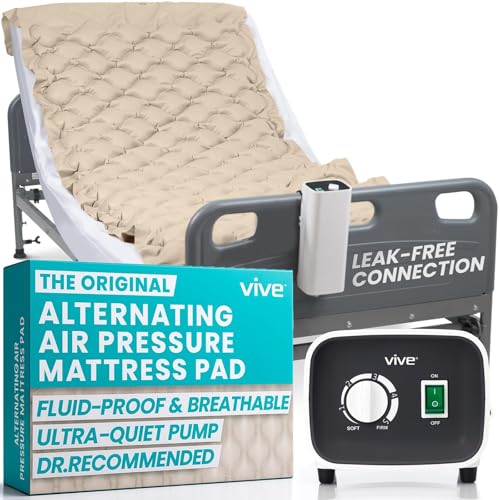
The Vive mattress pad targets bed sores and ulcers by evenly distributing weight and promoting circulation with 130 air cells. Its proprietary wave-like therapy inflates and deflates cells to reduce pressure buildup on vulnerable areas. The 22 dBA whisper-quiet pump provides continuous airflow with several pressure levels for a customizable experience. The system cycles through each gentle adjustment in roughly six minutes, offering steady relief without disruptive noise. It is designed for bedridden patients who need consistent, low-impact pressure relief.
Designed for reliable daily use, this pad excels at preventing skin maceration by maintaining a cooler, drier surface and reducing moisture buildup. The waterproof, breathable cushion helps with easy cleaning and long-term durability, making it a practical choice for home care or hospital settings. The compact form factor makes it suitable for a range of bed sizes, though users should verify that the receiver bed can accommodate the pump and pad together.
Kekoy Alternating Air Pressure Mattress Pad (Blue)

Kekoy’s blue model features 130 air cells and breathable micro vents to create a cool, dry sleep environment, aiding in comfort and reducing bedsores risk. Five adjustable pressure modes let caregivers tailor firmness to individual needs, from soft to firm. The pump delivers a gentle, wave-like cycle every 10–12 minutes to encourage targeted circulation without excessive motion. A compact inflation profile makes setup straightforward, and the unit aims to support elderly users, post-operative patients, and those with disabilities requiring long-term bed rest.
The design emphasizes a comfortable, ergonomic shape that supports key pressure points while maintaining airflow to prevent moisture buildup. The waterproof, heat-resistant ulcer cushion adds an extra layer of protection for vulnerable skin areas. This model is a strong candidate for caregivers seeking a reliable, low-noise system with multiple customization options to address changing patient needs.
Kekoy Alternating Air Pressure Mattress Pad (Beige)

This beige Kekoy model also features 130 air cells and a quiet 28 dBA pump, delivering consistent pressure relief with five adjustable modes. Its design includes a practical wave-cycle that gently massages key body areas every 10–12 minutes, promoting circulation and minimizing the risk of localized pressure damage. The unit is suited for home use and hospital settings alike, especially for patients who require a balance of support and quiet operation. The compact packaging and expansion to the full bed size make it easy to integrate into existing bedding setups.
Key benefits include a low-noise operation, effective pressure redistribution, and a high cell count to distribute weight evenly. The waterproof cover and heat-resistant cushion provide durable protection against leaks and skin irritation, aligning with long-term bed care strategies. This option is ideal for users who value a quiet, customizable, and durable pressure-relief system.
MedVance Premium Alternating Mattress Pad

The MedVance pad emphasizes ultra-quiet operation, with a sub-20 dB pump and dual cores for stable performance. The two-channel alternating mode cycles every six minutes to alternate weight distribution and reduce continuous pressure on the same areas. This approach helps alleviate bed sores and ulcers resulting from extended bed rest by improving circulation and reducing sustained pressure on vulnerable zones. It supports a variety of hospital, medical, and standard beds, making it a versatile option for healthcare facilities and home care alike.
With a focus on diagnostic-friendly monitoring and consistent air flow, the MedVance system aims to deliver reliable pressure relief even in quieter environments. Its design is straightforward for caregivers who need dependable setup and operation, while still providing patients the comfort of a properly supported sleeping surface. The compact footprint and adaptable sizing broaden its applicability for different bed configurations.
Lunderg Alternating Air Pressure Mattress Pad

Doctor and therapist-approved, Lunderg’s air pressure pad focuses on preventing and healing bedsores by relieving skin pressure and boosting circulation. Its flocked surface provides a soft, fabric-like feel that reduces sweating and heat buildup compared to vinyl surfaces. A quiet pump supports both alternating and static modes, letting caregivers choose a stable, fully inflated surface when needed. The four-mode approach (soft to firm plus static) supports tailored comfort for different patients and stages of healing, making it a versatile option for long-term care in both hospital and home settings.
The included topper enhances comfort and protection, while the adjustable system supports careful pressure management on critical areas. The dual modes (alternating and static) offer flexibility for patients who may benefit from a consistent surface at certain times of day or during rest. This model is a practical blend of comfort, control, and medical-grade performance for bed sore prevention and relief.
Buying Guide: Key Purchase Considerations
- Cell count and coverage: Higher cell counts (e.g., 130 cells) generally provide more even pressure distribution across a larger surface area, which helps prevent localized pressure injuries.
- Pump noise and maintenance: Look for pumps advertised as whisper-quiet or under 20–28 dB. A low-noise system improves sleep quality for patients and reduces caregiver disruption.
- Cycle duration and modes: Common cycles range from 6–12 minutes. Some models offer static mode, which keeps all cells inflated for a stable surface when needed, useful during certain medical procedures or rest periods.
- Size and fit: Ensure the mattress pad size matches the bed dimensions (e.g., 75″ x 35″–36″). Check for compatibility with hospital beds or adjustable bases if used in clinical settings.
- Durability and covers: Waterproof, breathable, and heat-resistant cushions help protect against moisture and skin irritation. A non-slip underside keeps the pad in place on medical beds.
- Ease of cleaning: Removable, washable covers are advantageous for hygiene and ongoing care, particularly in home care environments.
- Portability and setup: Some pads compress for shipping and expand upon inflation. Consider how easily caregivers can set up and operate the system in daily care routines.
- Trust and certification: Look for medical-grade materials and clinician-approved designs to ensure reliability and safety for bedridden patients.
In choosing among these options, weigh the patient’s mobility, skin condition, and bed setup. If noise sensitivity or frequent repositioning is a concern, prioritize models with lower decibel ratings and effective cycle variability. For long-term care, consider durability, ease of cleaning, and the ability to switch between alternating and static modes as needs evolve.