Finding an inflatable mattress topper designed for hospital beds can significantly improve comfort for bedridden patients and support skin health. The following selections focus on alternating pressure systems, quiet pumps, waterproof fabrics, and easy maintenance. This guide highlights five top options and compares their key features to help caregivers choose the right fit for home care or hospital settings.
| Product | Brand | Key Benefit | Notable Feature |
|---|---|---|---|
| Vive Alternating Air Pressure Mattress Pad | Vive | Trusted bed sore relief | 130 air cells with whisper-quiet pump |
| Kekoy Alternating Air Pressure Mattress Pad (75″ x 36″) | Kekoy | Customizable comfort | 5 pressure modes and 10- to 12-minute cycle |
| Lunderg Alternating Air Pressure Mattress Pad | Lunderg | Static mode option | Supports 300 lbs; quieter pump |
| Kekoy Beige 75″ x 35″ | Kekoy | Quiet operation | 28 dBA pump, 5 modes |
| SereneLife Pressure Mattress Pad | SereneLife | Medical-grade relief | Breathable air channels and standard hospital size |
Each option is designed to distribute weight evenly, reduce pressure points, and promote blood circulation. When evaluating these products, consider the ease of inflation, pump noise, compatibility with your hospital bed, cleaning requirements, and the level of patient mobility. The following sections provide detailed, objective information about each product and how it can help prevent bedsores and improve comfort during long periods of rest.
Vive Alternating Air Pressure Mattress Pad
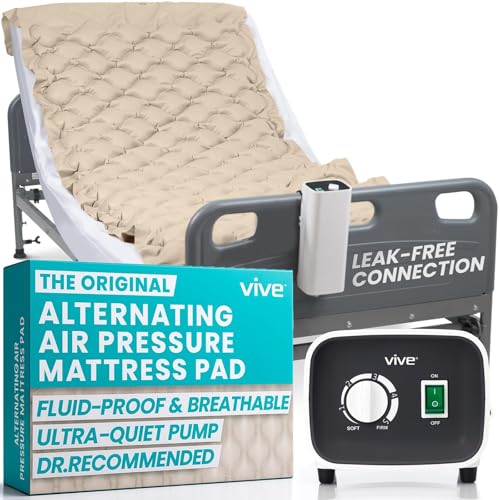
Overview and purpose: This hospital topper is designed to prevent bed sores and ulcers by evenly distributing weight. The system uses an alternating pressure pattern across 130 air cells, helping boost circulation for immobilized patients who cannot shift positions regularly. The pad is engineered to provide relief from common skin issues associated with prolonged bed rest, potentially improving overall comfort for bedridden individuals.
Key features: An advanced wave-like therapy drives the alternating inflation and deflation of every air cell, creating a surface that minimizes pressure buildup. Heat-sealed cells improve durability and reduce leakage risk. The whisper-quiet pump operates at approximately 22 dBA, delivering multiple pressure levels that can be customized to the patient’s needs. Each pressure cycle lasts around six minutes, offering routine but gentle position shifts without disturbing rest.
Considerations: The device is a pad that works with a compatible mattress topper system, requiring a separate pump purchase for full setup. It is ideal for long-term caregivers seeking reliable, low-noise operation and a clinically oriented approach to pressure management.
Kekoy Alternating Air Pressure Mattress Pad

Overview and purpose: The Kekoy alternating mattress pad is designed to prevent bedsores with a breathable micro-air vent system that supports a cool, dry sleeping environment. It is suitable for elderly individuals, post-operative patients, and those with disabilities who require extended bed rest and pressure relief in a home or institutional setting.
Key features: It inflates to a 75″ x 36″ surface after unpacking, with five adjustable pressure modes to tailor firmness. The cycle runs every 10-12 minutes, producing a gentle wave-like motion across the bed to provide targeted massage to body areas and prevent prolonged loading on the same spots. The pad includes a waterproof, heat-resistant ulcer cushion for added protection and comfort.
Considerations: It’s a comprehensive topper that balances comfort, cost, and practicality, making it suitable for both home care and limited hospital uses. The compact packaging and straightforward setup are helpful for caregivers with variable experience levels.
Lunderg Alternating Air Pressure Mattress Pad
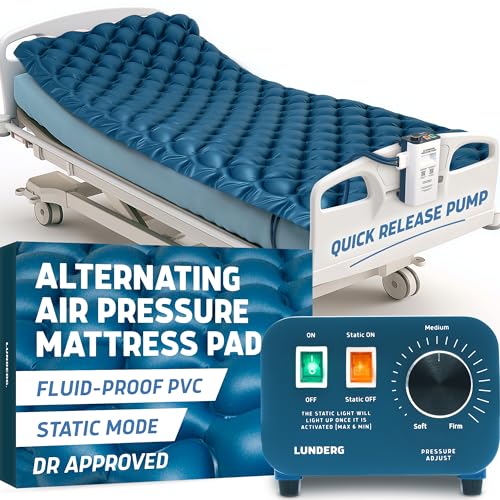
Overview and purpose: Lunderg’s mattress pad is designed to prevent bedsores, relieve pressure on skin and bony areas, and boost circulation. Developed by medical experts, it supports the healing process and reduces the need for frequent turning motions by caregivers.
Key features: The pump features a quick connector and a static mode option, allowing the surface to stay fully inflated for a stable resting surface when alternating cycles aren’t required. The device can accommodate up to 300 pounds, making it suitable for patients who may require higher weight support. This flexibility makes it appropriate for hospital beds and home care environments alike.
Considerations: The static mode can provide a break from routine cycling, which some patients may prefer. The system emphasizes stability and reliability, important for long-term care scenarios where continual adjustment is impractical for caregivers.
Kekoy Beige 75″ x 35″ Alt. Air Mattress Pad

Overview and purpose: This Kekoy model offers professional-grade bed sore prevention with a quiet pump and multiple modes. It is designed to create a gentle ceiling of support across the mattress surface, reducing the risk of skin breakdown during prolonged bed rest.
Key features: The pump operates at a notably quiet level (around 28 dBA) with five adjustable pressure modes. The system cycles every 10-12 minutes to deliver a soft wave-like massage along the body, improving circulation and reducing pressure on high-risk areas. The included waterproof ulcer cushion pad adds durability and protection against fluid exposure.
Considerations: The beige aesthetic blends well with most hospital or home bed setups. The combination of quiet operation and customizable firmness makes it a versatile option for caregivers seeking adaptable support for various patient needs.
SereneLife Pressure Mattress Pad

Overview and purpose: The SereneLife mattress pad emphasizes medical-grade design with alternating pressure cycles intended to prevent vascular compression and tissue hypoxia. It is suitable for standard hospital bed dimensions and is designed to adapt to patient positioning for optimal comfort.
Key features: Breathable air channels help diffuse moisture and reduce back pressure, while micro air circulation holes support skin health. The included 110/220V electric pump allows quick inflation and deflation, enabling caregivers to adjust firmness efficiently. The standard hospital bed size fits most care environments, facilitating straightforward compatibility.
Considerations: The breathable design and adjustable pressure provide a balanced approach to comfort and medical needs. It suits users who prioritize a medical-grade feel with responsive air circulation and reliable setup.
Buying Guide: Key Purchase Considerations For Hospital Bed Use
Bed sore prevention and comfort require careful selection of an inflatable mattress topper. The following considerations help compare options objectively and align features with patient needs.
- Pressure Cycle and Modes: Look for a device with multiple pressure settings and a regular cycle (often 10-12 minutes). This promotes varying contact areas and reduces prolonged loading on any single region.
- Pump Quietness and Reliability: In patient rooms, a quiet pump minimizes sleep disruption. Consider pumps rated near 20-30 dBA for minimal noise, plus durable construction to withstand daily use.
- Material and Waterproofing: Waterproof, heat-sealed surfaces extend durability and ease cleaning. Hypoallergenic fabrics or moisture barriers are beneficial for sensitive skin or infection control.
- Weight Capacity: Ensure the topper supports the patient’s body weight, especially for individuals who may sit or shift position less frequently. Some models offer higher weight ratings to accommodate a wider range of users.
- Compatibility with Bed: Verify that the topper fits standard hospital or home beds and that mounting or sizing does not require a full bed replacement. Some products fit on top of existing mattresses or toppers.
- Static Mode Option: A static mode can be useful when alternating cycles aren’t needed or for patients who prefer a stable surface for rest or therapy sessions.
- Maintenance and Cleaning: Prefer models with removable, washable covers or simple cleaning instructions. Durable seams and leak-prevention features reduce upkeep needs.
- Warranty and Support: Products backed by warranty and accessible customer service can be valuable for ongoing healthcare needs and replacement parts.
- Usage Context: Decide whether the topper is for long-term home care, hospital stays, or temporary recovery. Some toppers are designed more for home use, while others target clinical environments.
Selecting the right inflatable mattress topper involves balancing cost, durability, and patient comfort. When paired with a suitable hospital bed setup, these products can help manage bed sores, support circulation, and promote rest for users who require extended bed rest or rehabilitation.