Choosing an air mattress that fits a hospital bed requires attention to pressure relief, comfort, durability, and ease of use. This guide focuses on drive-brand options designed for home and facility care, offering alternating pressure, low air loss, and waterproof covers. Below, you’ll find concise product highlights and practical buying tips to help you compare features and select the right model for long-term comfort and skin protection.
Summary Table: Selected Products
- Drive Medical Med-Aire Low Air Loss Mattress Replacement System (Alternating Pressure) — Pressure redistribution with 20 replaceable bladders.
- Drive Medical 14029 Med-Aire Low Air Loss Mattress Replacement System — Digital controls, 20 cells, adjustable modes.
- Lunderg Alternating Air Pressure Mattress Pad with Static Mode & Flocking — Quiet pump, fabric-like surface, static mode option.
- Lunderg Alternating Air Pressure Mattress Pad with Static Mode — Quiet pump, static mode, hospital/home use.
- Alcedo Alternating Air Pressure Mattress Pad — Medical-grade, waterproof surface, supports up to 300 lbs.
Drive Medical Med-Aire Low Air Loss System

The Drive Medical Med-Aire system provides both alternating pressure and low air loss to optimize pressure redistribution, reduce shear, and manage microclimate. It uses 20 replaceable 8-inch bladders to maximize immersion and comfort, with a built-in pillow feature for head stability. The vapor-permeable cover helps manage moisture and heat buildup, supporting long periods of use on hospital beds or at home.
Drive Medical 14029 Med-Aire Low Air Loss System

This medical air mattress includes active features for pressure redistribution and shear/friction reduction. With 20 individually replaceable 8-inch bladders, it emphasizes immersion and a pillow feature to stabilize the head. The digital control unit offers diagnostic alarms and adjustable cycle times, and the system can operate in alternating or static pressure modes, appealing to diverse care needs.
Lunderg Alt. Air Pressure Pad With Static Mode & Flocking

This Lunderg model combines alternating pressure with a quiet pump and a flocked surface for a fabric-like feel. It includes a static mode option, letting caregivers choose a stable inflated setup when continuous alternation isn’t desired. The system is doctor-recommended for bed sore prevention and is suitable for hospital beds or home use.
Lunderg Alt. Air Pressure Pad With Static Mode
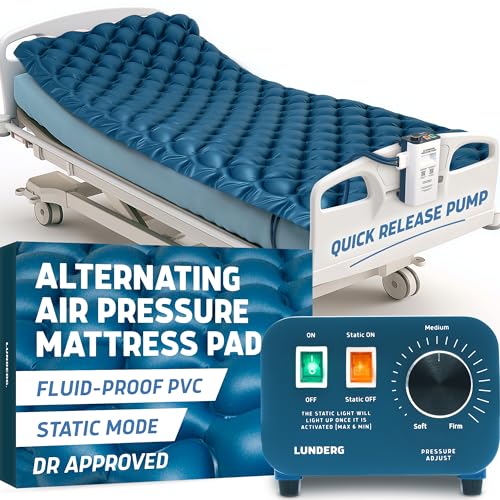
This Lunderg pad is designed for hospital bed or home use and supports up to 300 lbs. It features an updated quiet pump with a static mode and a quick connector for fast setup. The design emphasizes bed sore prevention and quick adaptation to patient needs, making it versatile for long-term care settings.
Alcedo Alternating Air Pressure Mattress Pad

Alcedo’s mattress pad emphasizes medical-grade quality with alternating pressure technology to prevent bedsores and ulcers. It offers a breathable, waterproof surface for easy cleaning and longevity, and supports up to 300 lbs. The product targets bedridden patients and long-term care, balancing durability with user comfort.
Buying a drive-brand air mattress for a hospital bed involves evaluating pressure management, ease of use, and compatibility with home or clinical environments. The featured products cover alternating pressure, low air loss, quiet operation, and waterproof surfaces, providing options for varying patient needs and caregiver preferences.
Buying Guide
Key considerations when selecting an air mattress for hospital beds:
- Pressure Distribution: Choose between alternating pressure, low air loss, or a combination to reduce pressure points and improve circulation.
- Bladder Design: More cells and appropriate bladder height enhance immersion and body contouring. Look for replaceable bladders for easier maintenance.
- Surface Materials: Waterproof, vapor-permeable, and fragrance-free covers help maintain hygiene and reduce moisture buildup.
- Noise Level: Quiet pumps (often under 28 dBA) minimize disruption for patients and caregivers.
- Weight Capacity: Ensure the mattress supports the patient’s weight and situational needs, typically up to 300 lbs or more.
- Compatibility: Verify the system fits your hospital bed model and has straightforward setup and alarms for safety.
- Maintenance: Check for ease of cleaning, removable covers, and availability of replacement parts.
- Modes and Controls: Digital or remote controls with multiple cycle times offer precise customization for comfort and healing progression.
In clinical or home-care contexts, it is essential to consult healthcare professionals to tailor the mattress choice to individual bedsores risk, mobility, skin tolerance, and caregiver capabilities. The options above provide scalable solutions—from compact pads for home use to comprehensive replacement systems designed for ongoing clinical needs.