Finding an air mattress that safely reduces pressure, supports healing, and fits a hospital bed can be challenging. This guide highlights five leading options designed for bedridden patients, emphasizing alternating pressure therapy, quiet pumps, and durable construction. Each product below is evaluated for comfort, ease of use, and proven pressure-relief benefits to help caregivers choose the right solution. Below the intro you’ll find a quick summary table of the selected products.
| Product | Brand | Key Benefit |
|---|---|---|
| Vive Alternating Air Pressure Mattress Pad | Vive | 130 air cells with whisper-quiet pump for continuous pressure redistribution |
| Kekoy Alternating Air Pressure Mattress Pad (Blue) | Kekoy | 5 pressure modes with 10–12 minute wave-like cycles for targeted relief |
| Lunderg Alternating Air Pressure Mattress Pad with Static Mode | Lunderg | Static mode option and doctor-approved prevention with up to 300 lb capacity |
| Drive Medical 14027 Med-Aire Low Air Loss Mattress | Drive Medical | 20 replaceable cells with low air loss and head pillow stability |
| MedVance Premium Alternating Air Pressure Mattress Pad | MedVance | Ultra-quiet pump, two-channel alternating mode for comfort and healing |
Note: Each product listed below is intended for use on hospital beds or home setups where pressure injury prevention is a priority. All descriptions reference the manufacturer’s features to help compare performance and suitability for different care environments.
Vive Alternating Air Pressure Mattress Pad
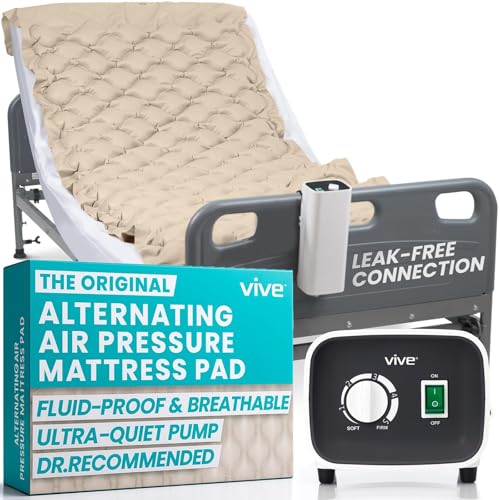
Designed to relieve bed sores and ulcers, Vive’s system uses 130 air cells with an alternating cycle to distribute weight evenly and reduce pressure spots. The wave-like therapy is engineered to increase circulation and prevent maceration, especially for immobilized patients who cannot shift their weight regularly. The whisper-quiet pump operates at about 22 dBA, offering continuous airflow and multiple pressure levels for a customizable experience. Each cycle lasts roughly six minutes, balancing comfort and relief.
Kekoy Alternating Air Pressure Mattress Pad (Blue)

Kekoy offers a compact-to-full-size transition with a 75″ L x 36″ W sleeping area and breathable micro air vents to maintain a cool, dry environment. The mattress features 5 adjustable pressure modes and a 10–12 minute cycle that produces a gentle wave-like massage from end to end. This design aims to prevent prolonged pressure on any single area while promoting circulation and reducing skin damage. The pump operates quietly for better sleep quality and less disruption during rest.
Lunderg Alternating Air Pressure Mattress Pad With Static Mode
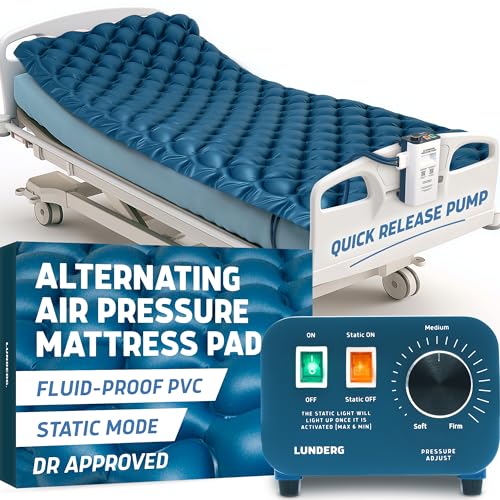
Lunderg’s mattress supports up to 300 lbs and includes a static mode option for periods where a stable, non-fluctuating surface is preferred. The catheter-free design and 130-cell configuration distribute pressure and enhance comfort. Doctors and therapists often recommend this product for bedridden patients who require consistent protection against bedsores while ensuring reliable performance in hospital and home settings alike. The adjustable pump lets users tune firmness specifications for individualized care.
Drive Medical 14027 Med-Aire Low Air Loss Mattress

This system blends alternating pressure with low air loss to optimize pressure redistribution, reduce shear, and manage microclimate. It features 20 individually replaceable 8-inch air bladders to maximize immersion and envelopment, plus a pillow feature for head stability. The durable cover resists fluids, is low-shear, and vapor permeable to help protect skin from moisture and friction, making it suitable for long-term care environments where skin integrity is a priority.
MedVance Premium Alternating Air Pressure Mattress Pad

MedVance Premium combines an ultra-quiet pump (under 20 dB) with a two-channel alternating mode, offering consistent relief while minimizing noise. The system is designed to prevent bed sores and ulcers by encouraging circulation through regular pressure changes. The digital control and alarms facilitate quick adjustments, while the two-channel design ensures dependable support across the body, making it a strong option for hospital-grade use and home care alike.
Buying Guide: Key Purchase Considerations
- Pressure distribution and cell count: Higher cell counts (e.g., 130 cells) typically offer finer weight distribution and better pressure relief across the body. Look for products that cycle through cells every 6–12 minutes for balanced relief.
- Pump noise and adjustable modes: A whisper-quiet pump improves user comfort and caregiver experience. Five to six adjustable pressure levels provide customization for comfort and medical needs. Static mode is useful for periods requiring a stable surface.
- Weight capacity and compatibility: Ensure the mattress supports the patient’s weight and is compatible with your bed size (75″ x 35″ to 75″ x 36″ are common hospital bed toppers). Durability and leak resistance are essential features for long-term use.
- Material and hygiene: A fluid-resistant, low-shear cover helps protect skin and reduce moisture-related risks. Breathable fabrics and micro-vents help maintain a cool, dry sleeping environment.
- Ease of use and maintenance: Look for simple inflation/deflation controls, clear indicators, and a straightforward assembly process. Some units include quick-connect features and easy deflation options for emergencies.
- Clinical alignment: For best outcomes, select products designed specifically for pressure ulcers prevention and management, with reversible benefits like improved circulation and reduced shear forces.
- Home vs. clinical settings: Hospital-grade devices often emphasize durability and reliability, while home-use toppers balance performance with ease of setup and cost.