For bedridden or mobility-limited individuals, an alternating pressure air mattress can help reduce pressure injuries by promoting circulation and distributing weight more evenly. The following selections are among the most recommended options for home use or medical care settings, combining quiet pumps, durable designs, and multiple pressure modes to tailor comfort while prioritizing skin health and healing.
| Product | Brand | Notes |
|---|---|---|
| Vive Alternating Air Pressure Mattress Pad | Vive | 130 air cells, whisper-quiet pump |
| Kekoy Alternating Air Pressure Mattress Pad (Blue) | Kekoy | 5 modes, 130 cells, wave-like massage |
| Lunderg Alternating Air Pressure Mattress Pad | Lunderg | Static mode option, quiet pump |
| Kekoy Alternating Air Pressure Mattress Pad (Beige) | Kekoy | 28 dBA silent pump, 5 modes, 130 cells |
| Drive Medical 14027 Med-Aire Mattress | Drive Medical | 20 cells, alternating pressure with low air loss |
Vive Alternating Air Pressure Mattress Pad
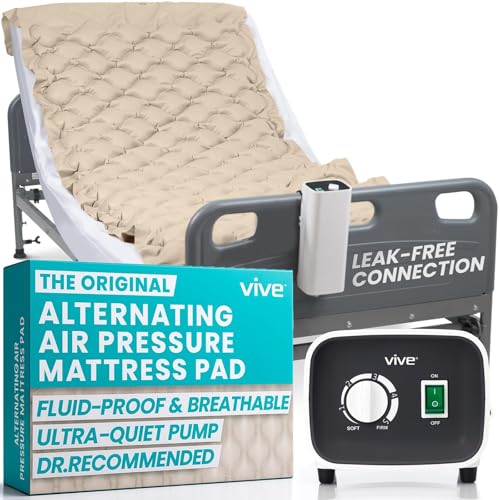
The Vive mattress pad is designed to provide doctor-recommended relief for bed sores and ulcers associated with prolonged bed rest. Its 130 air cells use a wave-like algorithm that alternates inflation across zones, distributing weight and easing pressure on vulnerable areas. The system aims to reduce skin maceration and improve overall comfort for immobilized patients who cannot shift their weight easily. Users can expect a noticeable improvement in circulation as cycles repeat, typically each six minutes, with a dedicated, quiet pump to minimize disturbance during rest. Durable heat-sealed cells help prevent leaks, ensuring long-term use.
Kekoy Alternating Air Pressure Mattress Pad (Blue)

The Kekoy blue mattress pad offers 130 air cells with 5 adjustable pressure modes, plus a gentle wave-like cycling every 10-12 minutes to promote targeted relief. The breathable micro-vent system creates a cooler, drier sleep environment that helps minimize night sweats and skin maceration, contributing to pressure-relief skincare. It inflates compactly and expands to full size after inflation. The pump operates quietly, preserving rest, while the system’s ergonomic curve adds extra support for elderly users or those with limited mobility. It includes a durable, waterproof ulcer cushion pad for added protection.
Lunderg Alternating Air Pressure Mattress Pad
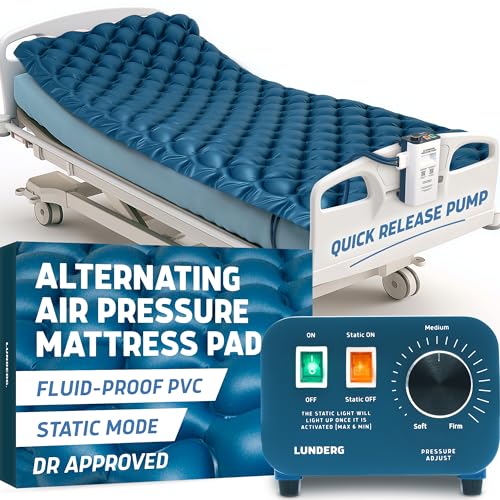
Developed with clinical input, Lunderg’s mattress pad focuses on prevention and healing of bedsores. It combines pressure relief with a quiet operation and an optional static mode—where all cells stay inflated for stable surface comfort. This flexibility can be valuable for patients transitioning from active cycling to restful stability. The setup supports heavier users up to 300 pounds, making it suitable for home care, hospitals, or nursing facilities. The combination of targeted cycling and a robust top layer aims to reduce turning frequency and support quicker recovery.
Kekoy Beiege Alternating Air Pressure Mattress Pad (Beige)

The beige Kekoy option emphasizes quiet operation with a 28 dBA pump and 5 adjustable pressure modes. Its 130 air cells provide comprehensive coverage for pressure redistribution across torso, hips, and heels. The unit cycles every 10-12 minutes in a gentle wave, delivering a massaging effect that can help relieve localized pressure while improving circulation. It’s marketed for home use as a reliable solution for bed sore prevention, particularly for bedridden individuals or those recovering from surgery who require extended bed rest. The package includes an ulcer cushion pad to protect high-risk areas.
Drive Medical 14027 Med-Aire Mattress

Drive Medical’s Med-Aire system combines alternating pressure with low air loss to optimize pressure redistribution, shear reduction, and microclimate control. With 20 individually replaceable 8-inch bladders, it supports maximum immersion and envelopment, along with a pillow feature for head stability. The durable PU cover resists fluids, reduces friction, and remains breathable to help manage moisture near the skin. This model is designed for long-term care settings and is well-suited for patients who require more comprehensive surface care, including persistent pressure concerns and moisture control.
Buying Guide: Key Purchase Considerations
When choosing an air mattress for bed sores, consider cycle duration, pressure range, noise level, weight capacity, and ease of use. A longer cycle (roughly 6–12 minutes) provides a balanced redistribution of pressure, though some users may prefer shorter or longer intervals based on comfort and medical advice. A higher number of cells (around 130) typically offers more uniform support, but fewer cells can still be effective with proper inflation. Noise matters for uninterrupted sleep; look for pumps advertised as “whisper-quiet” or under 30 dBA. Weight capacity ensures the product suits the patient’s needs, while a static mode can offer a stable surface for rest or nursing procedures. Durability of the cover and water-resistance are essential for hygiene and infection control. For caregivers, ease of cleaning, inflation speed, and reliable cell integrity are practical considerations. Finally, compatibility with hospital beds or home mattresses and the availability of replacement parts can influence long-term value.
Common features across top options include: 130-cell configurations for wide coverage, 5 adjustable pressure modes to tailor firmness, and quiet aluminum pumps designed for rest. Some models offer a static mode as an alternative to continuous cycling, which can be beneficial during daytime rest or when inspection and repositioning are needed. When evaluating the range of products, it’s helpful to compare how each system handles heat, moisture management, and ease of cleaning, especially when used in shared or clinical environments. Always consult with a healthcare professional to determine the most suitable cycle settings and duration for a given patient’s care plan.