Choosing an air flow mattress for a hospital bed can impact comfort, skin health, and circulation for bedridden patients. This guide highlights five leading options, explaining how alternating pressure systems work, what makes each model stand out, and how to pick the right pad for different care settings. All selections here are designed to reduce pressure points, improve airflow, and support safer long-term use in home or clinical care environments.
| Product | Key Benefit | Best For |
|---|---|---|
| Vive Alternating Air Pressure Mattress Pad | Whisper-quiet pump; 130 air cells; doctor-recommended relief | Bedridden patients needing continuous pressure relief |
| Kekoy Alternating Air Pressure Mattress Pad (Blue) | Breathable micro vents; 5 adjustable modes | Custom comfort with targeted massage cycles |
| Lunderg Alternating Air Pressure Mattress Pad | Static mode option; doctor-approved | Care settings requiring occasional static inflation |
| ProHeal Low Air Loss Mattress | Cell-on-cell design; moisture-wicking micro vents | Stages I–III ulcers; prevention and relief |
| Careboda Alternating Pressure Mattress Pad | Ultra-quiet pump; breathable PVC fabric | Quiet operation and easy cleaning in home or hospital bed |
Vive Alternating Air Pressure Mattress Pad
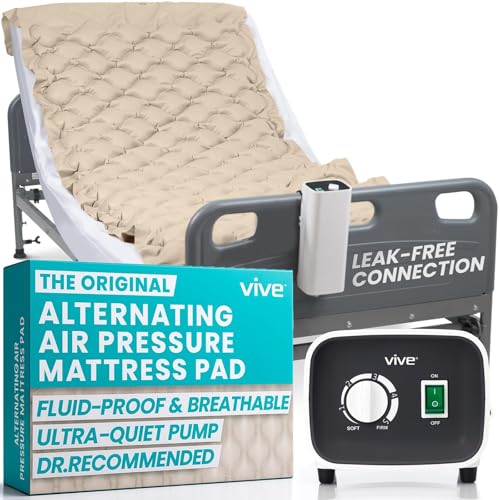
The Vive mattress pad uses 130 air cells to distribute weight evenly, reducing pressure spots and helping manage skin maceration for bedridden patients. The device is DOCTOR-RECOMMENDED for relief from bed sores and ulcers, delivering instant improvements in circulation and comfort. A crucial feature is the whisper-quiet pump, which operates at about 22 dBA, enabling restful sleep without disruptive noise. The system cycles through pressure levels with a six-minute cycle, balancing therapeutic benefit with user comfort.
Supported by a durable heat-sealed construction, each air cell resists leakage, maintaining consistent support over time. This model suits immobilized patients who cannot shift position independently, and the independent control of pressure levels allows caregivers to tailor the experience to individual needs. The combination of quiet operation, reliable airflow, and effective pressure redistribution makes the Vive pad a strong contender for home care and hospital settings alike.
Kekoy Alternating Air Pressure Mattress Pad (Blue)

This Kekoy model expands from a compact package to a full 75″ L x 36″ W sleeping surface after inflation, with breathable micro air vents creating a cool, dry sleep environment that reduces night sweats and skin irritation. Its desk-friendly software-like customization includes five pressure modes, allowing a range from firm to soft. Periodic wave-like motion occurs every 10–12 minutes to gently massage key body zones and promote circulation, which can help prevent prolonged pressure on any single area.
Designed with elderly users, post-operative patients, and those with disabilities in mind, the mattress pad blends comfort with professional-grade bed sore prevention. The ergonomic curve supports the body while maintaining effective surface contact. A waterproof, heat-resistant ulcer cushion pad adds an extra layer of protection against moisture, making this an appealing choice for long-term home care or hospital wards.
Kekoy Alternating Air Pressure Mattress Pad (Beige)

This 75″ x 35″ beige mattress pad features a whisper-quiet aluminum pump with 28 dBA operation, enabling a tranquil sleep environment. Five adjustable pressure modes give caregivers flexibility to respond to changing patient needs. With 130 air cells cycling every 10–12 minutes, the system delivers a soft-to-medium pressure alternation intended to reduce skin damage and relieve back pressure while promoting blood flow. It is marketed for bedridden elderly and post-operative users, making it suitable for both home care and clinical settings.
Lunderg Alternating Air Pressure Mattress Pad (Static Mode)
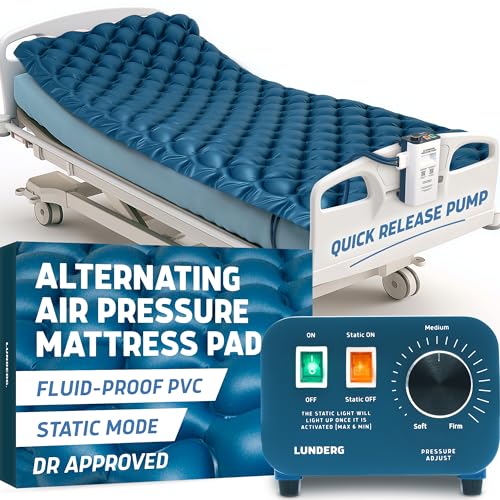
Doctors and therapists approve Lunderg’s system for preventing and healing bedsores. The mattress offers an updated quiet pump with a static mode, allowing all cells to remain fully inflated for a stable, comfortable resting surface when continuous alternation is unnecessary. The device is designed to support up to 300 pounds, making it a strong option for long-term care in homes, hospitals, or nursing facilities. The combination of static and alternating modes gives caregivers flexibility in managing patient comfort and pressure relief across varied care plans.
Medical King Alternating Air Pressure Mattress Pad

Designed for hospital and home use, this model uses 130 air cells to deliver a therapeutic cycle every 10–12 minutes. A 28 dBA quiet pump drives the system, providing a near-silent operation that supports restful sleep. The mattress emphasizes pressure ulcer prevention and relief for bedridden patients, with a focus on maintaining airflow to minimize moisture buildup. A simple dial allows customizing the pressure level to target comfort and healing needs, including heel and sacral relief to reduce localized pressure.
Careboda Alternating Pressure Mattress Pad

The Careboda model emphasizes a quiet operation with a pump specification under 40 dB and a fabric-like PVC surface that is easy to clean and waterproof. Multiple sealed air chambers distribute weight evenly to relieve pressure points, supporting comfort for long sleep or rest periods. The pad is suitable for hospital beds and home use, offering a reliable option for preventing bedsores while simplifying maintenance in busy care environments.
Buying Guide: Key Purchase Considerations And Comparisons
- Pressure relief strategy: Look for mattresses with 130 air cells or more, which offer finer distribution of weight and reduced risk of prolonged pressure on any single area. Wave-like or alternating cycles help to vary contact points and boost circulation.
- Noise level: A quieter pump (ideally under 30 dBA) reduces sleep disturbances for the patient and makes nighttime care more manageable for caregivers. Consider models with static mode as a backup during longer rest periods.
- Adjustability: Five or more pressure levels enable customization to weight, height, and medical needs. Some models include a static mode option to maintain an inflated, stable surface when desired.
- Durability and materials: Heat-sealed air cells and waterproof, easy-to-clean fabrics contribute to longer device life and hygiene. Check that the cushion and top layers resist moisture without sacrificing comfort.
- Weight capacity: If the patient weighs more than average, ensure the mattress can safely support the load (look for models rated to 300 lbs or higher).
- Care and cleaning: Choose mattresses with simple disassembly or wipe-clean surfaces for daily maintenance. Waterproof toppers are beneficial in home care settings.
- Size compatibility: Ensure the mattress matches the hospital bed and the patient’s torso length. Common sizes include 75″ L x 35–36″ W, with variations for different bed frames.
- Care setting: For home use, consider ease of setup and storage. For clinical environments, prioritize reliability, consistent performance, and infection-control features.
- Maintenance: Check for warranty, availability of replacement pumps, and ease of inflation to ensure consistent performance over time.