When selecting a low air loss mattress for pressure ulcers, the focus is on effective pressure redistribution, moisture management, and user-friendly operation. The following five products represent a range of clinically informed options designed to reduce skin breakdown, support comfort, and improve microclimate control for at-risk patients. Each entry highlights construction, cell design, and pump capabilities to help caregivers compare at a glance.
| Product | Brand | Key Features |
|---|---|---|
| Drive Medical 14027 Med-Aire | Drive Medical | 20 individually replaceable 8″ bladders; alternating pressure + low air loss; durable PU cover; head pillow feature |
| MedVance Low Air Loss Mattress | MedVance | Ultra-quiet digital pump; diagnostic alarms; 8″ cells; emergency CPR deflate; up to 24h power outage protection |
| ProHeal Low Air Loss Mattress (Cell On Cell) | ProHeal | 20 cell-on-cell bladders; 10-minute cycle; moisture-wicking 18-hole design; adjustable pressure points |
| Apex Medical Domus 3-8″ | APEX | 20 removable 8″ cells; dual therapy modes; quiet (<30dB) pump; adjustable firmness |
| Lunderg Alternating Air Pressure Mattress Pad | Lunderg | Static mode option; quiet pump; supports up to 300 lbs; hospital bed or home use |
The table above summarizes core attributes to help you compare products quickly. Each option is designed to minimize shear, manage moisture, and maintain a stable microclimate, while allowing caregivers to tailor pressure relief to patient needs. Below are detailed product sections with practical considerations, setup tips, and performance notes drawn from the listed features.
Drive Medical 14027 Med-Aire Low Air Loss Mattress

The Drive Medical Med-Aire system combines alternating pressure with low air loss to optimize pressure redistribution and reduce shear. It uses 20 individually replaceable 8-inch bladders to enhance immersion and envelopment, which helps conform to contours and minimize pressure points. A pillow feature adds head stability for comfort, while a removable 4-way stretch PU cover offers fluid resistance, low shear, and vapor permeability to protect skin from moisture-related irritation. This setup is suitable for both hospital and home environments where ongoing pressure management is required.
MedVance Low Air Loss Mattress With Alarm

MedVance emphasizes a quiet, user-friendly experience with a hospital-grade air mattress and a digital pump. The system features diagnostic alarms and a weight/pressure display, enabling precise adjustments for individual patient needs. An emergency CPR deflate function allows rapid response when necessary. The 8-inch deep air cells and a design that avoids bottoming out help maintain consistent microclimate control and skin protection during both static and alternating modes, including up to 24 hours of power outage protection. The mattress is designed for versatility in clinical or home-care settings.
ProHeal Low Air Loss Mattress (Cell On Cell Base)

ProHeal’s 20 cell-on-cell bladders and a 10-minute alternating cycle address patient movement and blood flow, helping prevent ulcer progression. The cell-on-cell design preserves air in the lower four inches during power interruptions, contributing to safety during outages. With 18 strategically placed holes, the system provides moisture-wicking ventilation to create a healthier skin microclimate. A dial permits customized pressure relief at key points, such as the buttocks and heels, and the mattress is designed for simple installation on standard hospital or home beds.
Apex Domus 3-8″ Low Air Loss Mattress

Apex Domus 3-8″ provides a dual-therapy framework with alternating and static modes to balance pressure redistribution and surface stability. Twenty removable 8-inch air cells offer customizable fit to patient anatomy, and the foam-friendly design can be installed over standard hospital or home beds. The pump operates at low noise, helping minimize sleep disruption while delivering reliable pressure management. This option is suitable for patients requiring adjustable firmness and versatile therapy settings in varied care environments.
Lunderg Alternating Air Pressure Mattress Pad
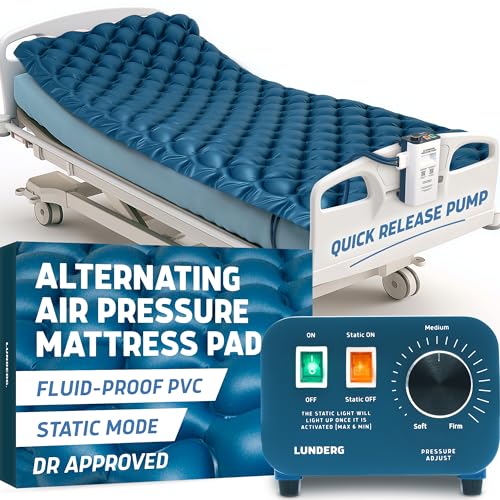
The Lunderg pad emphasizes doctor and therapist input for bed sore prevention, featuring an adjustable quiet pump with static mode. It accommodates home or hospital settings and supports up to 300 pounds, offering reliable performance for longer-term use. Static mode provides a stable surface when needed, while alternating mode supports regular pressure redistribution. The fabric is breathable, with waterproof properties to simplify cleaning and hygiene maintenance. This option is well-suited for users who require a balance between active therapy and simple operation.
Buying Guide: Key Purchase Considerations
When choosing a low air loss mattress, consider the following factors to align with patient needs and caregiver capabilities:
- Pressure redistribution vs. static support: Determine whether ongoing pressure relief through alternating cycles is essential, or if static support is preferred for certain conditions or patient tolerance.
- Cell design and depth: Deeper cells (e.g., 8″) generally offer better immersion, while cell-on-cell configurations may help retain air during outages. Consider the patient’s weight, mobility, and risk areas (sacrum, heels, hips).
- Power reliability: Look for systems with power-outage protection or easy deflation features for rapid response during outages or emergencies.
- Moisture management: A breathable, moisture-wicking surface reduces skin maceration risk. Verify cover materials and cleaning requirements.
- Noise level and ease of use: Quieter pumps support better sleep; intuitive controls and diagnostic alarms facilitate care.
- Compatibility and installation: Ensure the mattress fits the patient’s bed frame (hospital or home) and accommodates any accessories, overlays, or overlays as needed.
- Maintenance and durability: Replaceable bladders, durability of the cover, and availability of spare parts influence long-term costs and uptime.
- Care setting alignment: Hospital-grade systems may offer more robust alarms and diagnostics, while home-use variants prioritize simplicity and comfort.
From a clinical perspective, selecting a mattress with a reliable combination of cell-on-cell design, low air loss, and adaptive pump features tends to support broader patient needs across pressure ulcer stages I–III and higher-risk individuals. Balancing cost considerations with features such as power outage protection, adjustable pressure points, and quiet operation can lead to a durable, effective solution for both acute and long-term care settings.