Find relief from back soreness with purpose-built alternating air pressure mattress pads. These devices aim to reduce pressure on the spine and hips while improving circulation, making them suitable for bedridden users, seniors, or anyone managing chronic back discomfort. The following selections emphasize comfort, quiet pumps, and sturdy construction to support long-term use. Each product targets different living situations, from home care to hospital-like setups.
| Product | Best For | |
|---|---|---|
| Vive Alternating Air Pressure Mattress Pad | Caregivers of bedridden patients | Whisper-quiet operation with 130 cells for even weight distribution |
| Lunderg Alternating Air Pressure Mattress Pad | Home or hospital beds | Static mode option for steady support, 23 dBA pump |
| Alcedo Alternating Air Pressure Mattress Pad | General bed users seeking waterproof surface | Waterproof cushion and durable high-density materials |
| MedVance Premium Alternating Pad | Care facilities or home use needing quiet operation | Ultra-quiet digital pump with alarms |
| Kekoy 130-Cell Mattress Pad | Long-term bed rest and prevention programs | 130 bubble cells for continuous redistribution |
Vive Alternating Air Pressure Mattress Pad
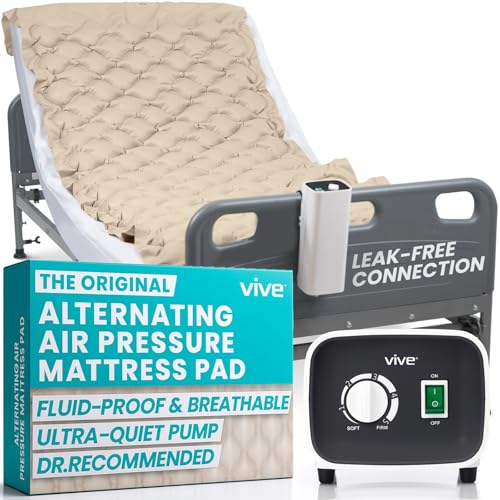
Best for immobilized loved ones who cannot shift weight regularly. This pad uses 130 air cells with a wave-like therapy to evenly distribute weight and relieve pressure spots, reducing skin maceration. The device is doctor-recommended for bed sores and ulcers and aims to improve circulation with durable heat-sealed cells to prevent leaks. The whisper-quiet pump runs at about 22 dBA and offers multiple pressure levels for a customized, restful sleep.
Why selected: The combination of 130 cells, a quiet pump, and a doctor-endorsed claim makes it a strong option for long-term bed care where steady pressure relief is essential. Limitations: Like many air-melled toppers, performance depends on proper setup and a compatible bed frame.
Lunderg Alternating Air Pressure Mattress Pad
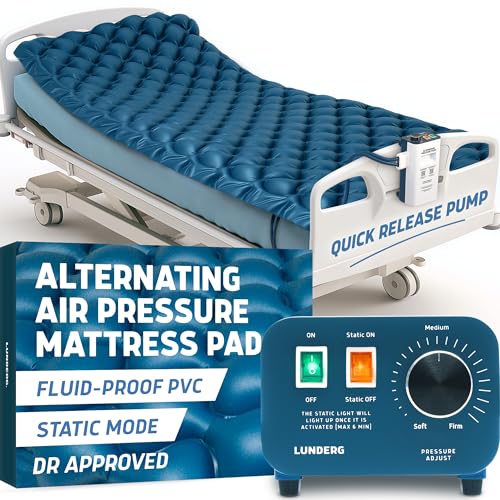
Best for hospital beds or home care setups where quiet operation matters. Lunderg offers a 23 dBA pump and a Static Mode to keep all cells inflated for a stable surface when alternation isn’t needed. It supports up to 300 lbs, making it suitable for a range of users and care environments. The dual mode—alternating and static—gives flexibility for care routines and rest periods.
Why selected: The two-speed, quiet pump and static option provide adaptable support for varied patient needs. Limitation: Static mode may not provide the same pressure redistribution as alternating cycles during heavy repositioning.
Alcedo Alternating Air Pressure Mattress Pad

Best for growing comfort in a hospital or home setting with a waterproof surface. Alcedo combines alternating pressure therapy with durable, high-density materials and a waterproof cushion. The design emphasizes easy cleaning and robust seam construction, providing reliable support for long-term use up to 300 lbs. The pad aims to reduce heat and moisture buildup while redistributing weight.
Why selected: Waterproof, easy-to-clean surface plus a robust build makes it a practical choice for daily care in busy environments. Limitation: Performance depends on the fit with the mattress and secure anchoring beneath.
MedVance Premium Alternating Pad

Best for care facilities or homes seeking a quiet, hospital-grade solution. MedVance features an ultra-quiet digital pump (under 20 dB) with dual pump cores for steady airflow. A digital control panel with alarms supports easy adjustments. The system cycles every 6 minutes to promote even weight redistribution, helping prevent pressure ulcers over time.
Why selected: The ultra-quiet operation and alarm-enabled control provide reliable monitoring and comfort. Limitation: Alarms require setup and regular maintenance to ensure they function correctly.
Kekoy 130-Cell Mattress Pad

Best for long-term bed rest and prevention programs. Kekoy uses 130 bubble air cells to distribute weight evenly, reducing pressure on hips, back, shoulders, and heels. The pad includes a waterproof cover and an adjustable, whisper-quiet pump. It’s designed for home care, hospitals, and skilled nursing environments seeking comprehensive pressure relief.
Why selected: A high-cell-count design improves pressure redistribution across larger areas. Limitation: The setup often relies on proper anchoring and measurement to fit standard beds accurately.
Buying Guide: Key Considerations For Choosing A Mattress Pad
- What level of relief do you need? Consider the user’s risk of pressure ulcers and current mobility level. Higher cell counts often provide smoother transitions.
- How quiet is the pump? For overnight use, look for pumps labeled as whisper-quiet or under 25 dBA.
- Is a static mode available? Static mode can provide stable support when alternating cycles are not needed or during rest periods.
- How easy is cleaning? Waterproof or water-resistant covers help with cleaning and infection control in home or facility settings.
- Weight capacity and bed type compatibility matter. Choose models that support the user’s weight and fit standard hospital or home beds.
Frequently Asked Questions
- What is alternating pressure therapy? It alternates inflation among air cells to redistribute weight and relieve pressure on vulnerable areas, reducing the risk of bed sores.
- Who should use an air pressure mattress pad? Individuals with limited mobility, bedbound users, seniors, and caregivers seeking enhanced comfort and pressure relief.
- Do these pads require professional setup? Most are designed for at-home setup, but correct installation improves effectiveness and reduces leaks.
- How long can I use these pads daily? They are designed for long-term use in bed or hospital settings, with continuous cycles typically running as long as powered.
- What maintenance is needed? Regular cleaning of the cover, inspecting seals for leaks, and ensuring pumps are functioning properly.
- Are there safety precautions? Follow manufacturer instructions, avoid placing sharp objects on the surface, and monitor for skin changes or pain during use.