Finding the right low air loss alternating pressure mattress can help reduce pressure ulcers and improve comfort for bedridden patients. The following selections highlight systems that combine alternating pressure with low air loss, aiming to enhance immersion, reduce shear, and maintain a stable microclimate. Below are five standout options with concise overviews and practical buying notes.
| Product | Brand | Key Benefit |
|---|---|---|
| Drive Medical 14027 Med-Aire Low Air Loss Mattress Replacement System | Drive Medical | 20 replaceable bladders, head pillow stability |
| MedVance Low Air Loss Mattress Replacement System with Alarm | MedVance | Ultra quiet pump, digital controls with alarms |
| Vive Alternating Air Pressure Mattress Pad | Vive | 130-cell design, whisper-quiet pump, adjustable pressure |
| ProHeal Low Air Loss Alternating Pressure Mattress | ProHeal | Cell-on-cell design, moisture-wicking ventilation |
| Lunderg Alternating Air Pressure Mattress Pad | Lunderg | Quiet operation, static mode option, doctor-approved |
These selections reflect a range of features—from silent pumps and digital alarms to cell-on-cell designs and customizable pressure controls—so caregivers can choose based on patient needs, mobility, and environment.
Drive Medical 14027 Med-Aire Low Air Loss Mattress Replacement System

The Drive Medical 14027 combines alternating pressure with low air loss across 20 individually replaceable 8-inch bladders. The system emphasizes pressure redistribution, shear reduction, and microclimate control to help protect skin integrity. A pillow feature aids head stability, while a removable 4-way stretch PU cover provides fluid resistance and low shear. This configuration supports immersion and envelopment for improved comfort during long-term use.
MedVance Low Air Loss Mattress Replacement System

The MedVance system features an ultra-quiet hospital-grade pump (<20 dB) with digital adjustments and diagnostic alarms. It supports low air loss through an 8-inch cell design, reducing bottoming out and offering up to 24 hours of power outage protection. The pillow function helps maintain head support, and the device includes a rapid deflate emergency CPR feature for quick patient relief. A user-friendly LED display communicates weight and pressure for easy monitoring.
Vive Alternating Air Pressure Mattress Pad
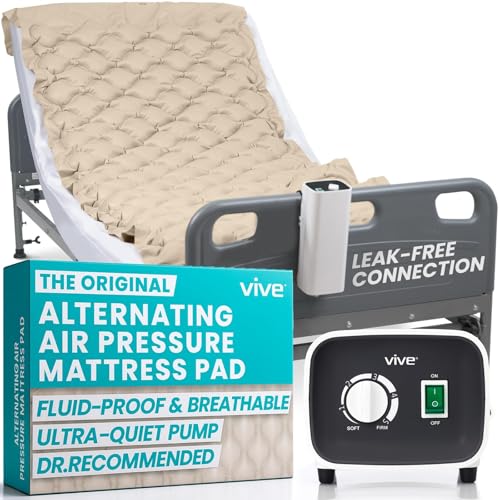
The Vive pad uses 130 air cells with an algorithm that alternates inflation to redistribute weight and relieve pressure spots. Its whisper-quiet pump operates at about 22 dBA, offering customizable pressure levels and cycles lasting roughly six minutes. The system aims to maintain skin integrity by promoting circulation and reducing moisture-related maceration, making it suitable for immobilized patients or those at risk of bed sores.
ProHeal Low Air Loss Alternating Pressure Mattress

ProHeal’s mattress features 20 cell-on-cell bladders designed to prevent bed sores by cycling air flow every 10 minutes. It emphasizes skin care through 18 laser-size holes for moisture-wicking ventilation and a microclimate environment. The design includes a user-friendly pressure control dial to tailor relief at specific sites like the buttocks and heels, with a head section engineered to resist movement during alternating cycles. A compact setup aids care in hospital or home settings.
Lunderg Alternating Air Pressure Mattress Pad
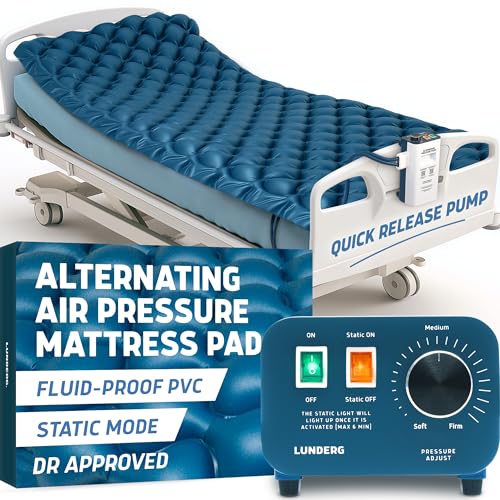
Lunderg’s system targets bed sore prevention with doctor and therapist validation. It offers a static mode for uninterrupted support and a quick-connect pump for simple operation. The cushion is designed to support long-term care in both hospital and home environments, with a focus on comfort, circulation, and ease of use. This pad supports up to 300 pounds, aligning with wider patient populations seeking reliable alternating and non-alternating modes as needed.
Buying Guide: Key Purchase Considerations
- Pressure relief strategy: Consider whether the model emphasizes frequent cell-to-cell cycling, a deep cell count for immersion, or a combination to suit patient needs and skin integrity risk levels.
- Cell design and layout: Cell-on-cell constructions help prevent bottoming out; more cells typically allow finer pressure distribution. Check the depth (e.g., 8 inches vs 10 inches) and how easily cells can be replaced or serviced.
- Microclimate and moisture management: Low air loss capabilities and moisture-wicking covers reduce skin maceration. Look for breathable covers and ease of cleaning to support hygiene.
- Pump noise and power reliability: Whisper-quiet pumps reduce caregiver disturbance; assess power outage protection and back-up options if available in the model.
- User interface and alarms: Digital controls, diagnostic alarms, and CPR/deflation features can improve response time in emergencies or rapid patient changes.
- Portability and care settings: Hospital-grade vs. home-use designs differ in weight capacity, mobility, and setup complexity. Verify compatibility with current beds and frames.
- Maintenance and durability: Removable covers, reusable bladders, and repair kits support long-term use. Consider lifetime costs and availability of replacement parts.
- Weight capacity and patient needs: Ensure the unit supports the patient’s weight and clinical condition, including higher-risk populations for pressure ulcers (Stage I–IV).
When selecting a low air loss alternating pressure mattress, balance clinical needs with practical considerations such as ease of use, noise level, and maintenance requirements. The options listed here provide a spectrum of features to support caregivers in managing pressure, moisture, and overall patient comfort.