When camping or backpacking, an inflatable sleeping pad or all-in-one sleeping bag can dramatically improve comfort and warmth. This guide highlights top inflatable sleeping pads and all-in-one solutions, helping you compare thickness, weight, setup time, and insulation. Each product below includes practical details to support an objective buying decision for American outdoor enthusiasts.
Compare At A Glance
| Product | Type | Approx. Thickness | Key Benefit |
|---|---|---|---|
| FUN PAC Camping Sleeping Pad | Self-inflating pad | 8 inches | Built-in pillow; quick inflate/deflate |
| Rangland AirPack Sleeper | All-in-one inflatable sleeping bag | 3 inches lift | Integrated head pillow; dual valves |
| FNARMW Camping Sleeping Pad | Sleeping pad with built-in pump | 5 inches | 60-second inflate; heavy-duty fabric |
| Gear Doctors Ether Pad | Ultralight inflatable sleeping pad | ~3 inches (edges thicker) | Compact, high portability; 440 lb capacity |
| MOXILS Sleeping Pad | Ultralight inflatable pad | ~3.5 inches | Foot pump; durable materials |
Choosing the right inflatable sleeping solution depends on your typical scenarios—solo backpacking, car camping, or family trips. The selections below focus on widely compatible options, balancing comfort, weight, setup speed, and durability for American outdoor use.
FUN PAC Ultralight Camping Pad With Pillow

The FUN PAC self-inflating sleeping pad is designed to reduce ground feel and neck strain with an integrated pillow and egg-shaped air cells. It measures up to 78 by 27 by 8 inches, offering a wide surface and a stable sleep platform. A two-layer valve system minimizes air leaks while inflating in 30–60 seconds and deflating in about one second, making it a time-saving choice for quick setup at campsites or on multi-day hikes. Its compact build and lightweight design ease backpacking and travel.
Key features include an extra-wide footprint for varied sleeping positions, built-in pillow for head support, and a compact form factor when packed. The mattress is well-suited for those who value a balance of comfort and portability on the trail.
Rangland AirPack Sleeper: All-In-One Inflatable Sleeping Bag

The Rangland AirPack Sleeper pairs a full-size sleeping bag with a built-in inflatable comfort pad, elevating the sleeper by about 3 inches. It includes a built-in head pillow and foot pump with dual valves for quick inflation and deflation, and measures 80 by 30 inches, making it comfortable for taller users. Its warmth is enhanced by 330GSM cotton fill, which traps heat to deliver reliable insulation in cool conditions. The hood’s adjustable drawstring helps seal warmth and block drafts, while the design aims to maintain loft and even warmth across the sleeper’s body.
FNARMW 5-Inch Thick Camping Pad With Built-In Pump

FNARMW offers a robust 5-inch thick sleeping pad designed to mimic hotel-grade comfort in outdoor settings. The 79 by 28-inch sleeping surface uses an egg-cell design with a built-in pillow, supporting both back and side sleepers. A built-in foot pump inflates the pad in about 60 seconds, with a quick-release valve that deflates in roughly one second. The 50D nylon with TPU coating gives durability and resistance to wear, while the overall load-capacity is engineered to support substantial weight. This pad is ideal for car camping or longer backpacking trips where comfort matters most.
Gear Doctors Ether 17.5oz Ultralight Sleeping Pad

The Gear Doctors Ether pad is a compact ultralight option, designed to collapse to a bottle-sized footprint and inflate to about 76 by 25 inches. Its ErgoCushion contour supports a variety of sleep positions, and a detachable foot pump kit facilitates quick inflations without strenuous hand work. The pad is built with durable 20D nylon and TPU to handle rugged outdoor use, and it supports up to 440 pounds. A warranty and repair kit accompany the unit, reinforcing a focus on longevity for outdoor enthusiasts who value reliable gear.
Myxslop Camping Sleeping Pad: Five-Inch Comfort Pad
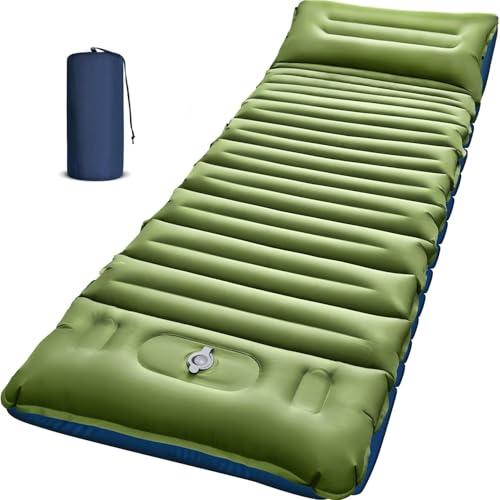
Myxslop presents a 5-inch-thick sleeping pad with a built-in pillow and foot pump for quick setup. It measures about 79 by 27 inches, with a striped air-tube design to evenly distribute pressure and reduce pressure points. The built-in foot pump inflates in roughly 30–60 seconds, and the valve deflates quickly, making pack-up simple. Constructed with 40D nylon and TPU coating, the pad promises durability while offering a high load capacity (noted up to 880 pounds in marketing references). The fabric and construction aim to balance rugged use with comfortable support in varying conditions.
Buying Guide: Key Considerations For Inflatable Sleeping Pads And All-In-One Sleeping Bags
- Inflation method and speed: Built-in pumps save time and effort, important when setting up after a long day. Consider whether you prefer manual inflation, foot pumps, or quick-blow options.
- Thickness and support: Thicker pads (4–5 inches) generally offer better cushioning on rough or rocky ground, while thinner pads save weight for long treks.
- R-Value and warmth: For cool nights, insulation value matters. All-in-one sleeping bags with built-in pads provide warmth from the ground up, but individual pad insulation can vary.
- Durability and materials: Look for reinforced edges, heat-sealed seams, and tear-resistant fabrics (e.g., 40D–50D nylon with TPU coatings) for rugged environments.
- Weight and packed size: Backpackers prioritize lightweight options with small packed dimensions; car campers may accept bulkier, more comfortable models.
- Storage, care, and warranty: Check for repair kits or warranties that cover punctures or valve leaks to minimize downtime on trips.
- Versatility: All-in-one solutions (sleeping bag with built-in pad) save space but may limit customization of temperature layering. Separate pads allow pairing with different sleeping bags or blankets as conditions vary.
- Sizing and fit: Ensure pad length and width match your height and preferred sleeping position for optimal comfort and support.
- Ease of packing: Consider how quickly the pad deflates and folds, as well as whether the deflation process is user-friendly in wet or cold conditions.