Choosing the right hospital-grade air mattress can help prevent and treat bed sores for bedridden patients. This guide highlights five leading options designed to distribute pressure, boost circulation, and minimize skin maceration. Each model features multiple pressure settings, quiet pumps, and durable surfaces suitable for home or hospital use. Read on to compare features and find the best fit for comfort, safety, and care needs.
Summary of Selected Products
| Product | Brand | Key Benefit |
|---|---|---|
| Vive Alternating Air Pressure Mattress Pad | Vive | 130 air cells with whisper-quiet pump for pressure relief |
| Kekoy Alternating Air Pressure Mattress Pad (Blue) | Kekoy | Breathable vents and 5 adjustable pressure modes |
| Drive Medical 14027 Med-Aire System | Drive Medical | 20 cells with low air loss and head pillow feature |
| Kekoy Alternating Air Pressure Mattress Pad (Beige) | Kekoy | Quiet pump with 5 modes and 130 cells for circulation |
| Lunderg Alternating Air Pressure Mattress Pad | Lunderg | Static mode option and doctor-approved design |
Vive Alternating Air Pressure Mattress Pad
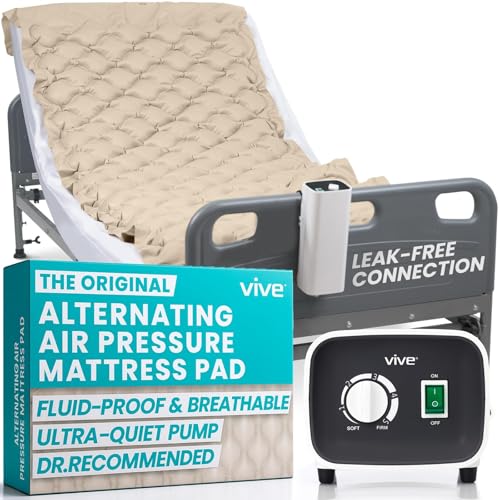
The Vive mattress pad uses alternating pressure with 130 air cells to distribute weight and relieve pressure spots. It aims to reduce bed sores and skin maceration for bedridden patients and immobilized individuals who cannot shift easily. The cushion is designed for durability with heat-sealed cells to prevent leaks, ensuring reliable performance over time.
Its whisper-quiet pump operates around 22 dBA, offering multiple pressure levels and a six-minute cycle per rise and deflate sequence. This combination supports uninterrupted rest and customizable comfort, making it suitable for homes and care facilities aiming to improve skin integrity and patient comfort.
Kekoy Alternating Air Pressure Mattress Pad (Blue)

The Kekoy blue mattress pad inflates and deflates across 130 air cells to prevent prolonged pressure on any single area, supporting blood circulation and reducing the risk of bedsores. It features breathable micro-air vents to keep the sleeping surface cool and dry, minimizing night sweats. Five adjustable pressure modes let caregivers tailor firmness, while a 10–12 minute cycle adds a gentle wave-like massage for targeted relief.
Drive Medical 14027 Med-Aire System

This system combines alternating pressure with low air loss to optimize pressure redistribution, reduce shear, and manage microclimate. It uses 20 individually replaceable 8-inch bladders to maximize immersion and includes a head pillow feature for stability. A removable, fluid-resistant 4-way stretch PU cover protects skin from friction and moisture, aiding skin integrity in long-term care settings.
Kekoy Alternating Air Pressure Mattress Pad Beige

The beige Kekoy model expands to 75″ x 35″ after inflation with a quiet pump delivering up to five adjustable modes. With 130 air cells and 10–12 minute cycling, it provides consistent pressure relief and a gentle wave massage to improve circulation and reduce tissue stress. It is positioned as suitable for bedridden elderly, post-operative patients, and disabled individuals seeking reliable bed sore prevention at home or in care facilities.
Lunderg Alternating Air Pressure Mattress Pad
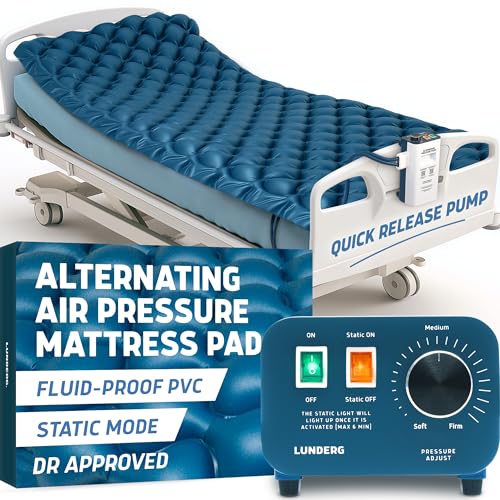
Designed for both hospital beds and home use, this Lunderg mattress pad emphasizes doctor and therapist approval. It offers an option for static mode along with alternating cycles, enabling stable rest when needed. The surface supports up to 300 lbs and focuses on preventing bed sores while enhancing comfort and healing through improved pressure distribution and circulation.
Buying Guide: Key Purchase Considerations
- Pressure distribution and cell design: Look for an alternating pressure system with 100+ cells to ensure uniform weight distribution and reduce peak pressure areas.
- Pump noise and reliability: A quiet pump (ideally under 30 dBA) minimizes sleep disturbances and caregiver fatigue.
- Cycle duration and modes: Cycle times around 10–12 minutes with multiple firmness levels allow customization for different patients and stages of healing.
- Compatibility with care settings: Consider models suitable for home use or hospital environments, including weight capacity and ease of cleaning.
- Materials and moisture management: Removable, fluid-resistant covers and breathable surfaces help prevent skin maceration and maintain skin integrity.
- Durability and maintenance: Heat-sealed air cells and replaceable bladders extend mattress life and simplify maintenance.
- Safety features: Look for alarms or digital monitoring options that aid in monitoring pressure and patient safety during care transitions.
- Size suitability: Verify dimensions match your bed and living space; many toppers come in common hospital bed sizes.
- Cost versus long-term value: While upfront cost varies, choose a model with proven clinical benefits and life-cycle durability to reduce healthcare expenses over time.
When selecting a hospital air mattress for bedsores, compare how each option combines pressure relief, noise level, maintenance needs, and size compatibility. Real-world use often benefits from models offering both alternating and static modes, ensuring comfort for patients with varying care requirements. Consider consulting a healthcare professional to identify the most suitable pressure settings and cycle times for specific conditions and stages of pressure ulcers.