This article highlights top alternating pressure mattress overlays designed to prevent and heal bed sores, using multi-cell technology and quiet pumps for home and hospital use. Each pick balances pressure redistribution, comfort, and durability, helping bedridden individuals maintain better skin integrity and circulation. Below, five standout options are examined with features, sizes, and practical considerations to help caregivers and patients choose wisely.
Summary Table
| Product | Brand | Key Benefit | Typical Use |
|---|---|---|---|
| Vive Alternating Air Pressure Mattress Pad | Vive | 130 air cells with Whisper-Quiet pump | Bedridden patients needing pressure relief |
| Kekoy Alternating Air Pressure Mattress Pad (Blue) | Kekoy | 5 adjustable modes with wave-like massage | Home care and hospital settings |
| Drive Medical 14027 Med-Aire | Drive Medical | 20 replaceable cells; low air loss | Comprehensive clinical support |
| Lunderg Alternating Air Pressure Mattress Pad (Static Mode) | Lunderg | Static mode option; quiet pump | Long-term care at home or facility |
| Roho Prodigy Premium Mattress Overlay | Platinum Health | 3.5-inch depth-of-immersion; no moving parts | Advanced pressure ulcer prevention |
The following sections detail each product’s design, performance, and user considerations, to assist in matching a mattress overlay to specific health needs, mobility, and care environments.
Vive Alternating Air Pressure Mattress Pad
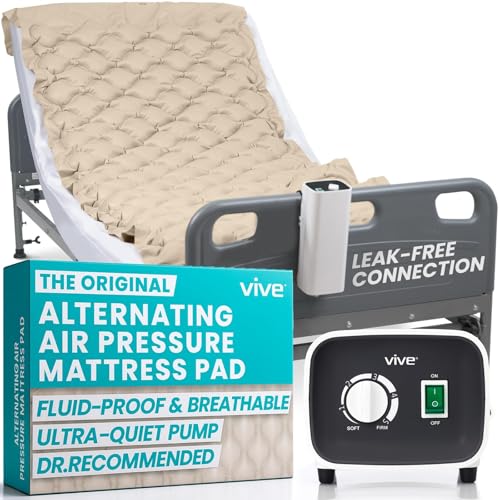
The Vive mattress pad uses 130 independently controlled air cells to deliver wave-like alternating pressure, actively redistributing weight to reduce pressure spots. The system is designed for bedridden individuals who struggle to shift positions, supporting skin health and comfort over extended periods. Durability is emphasized with heat-sealed cells to minimize leaks, and the pump operates at a whisper-quiet 22 dBA, ensuring minimal sleep disruption. With multiple pressure levels and six-minute cycles, caregivers can tailor the experience to the patient’s tolerance and needs.
Key considerations include bed size compatibility and ease of pump maintenance. The unit’s waterproof, breathable top layer is designed to resist moisture while allowing air movement, which can aid in managing moisture-related skin maceration. For caregivers, the quiet operation and customizable cycling provide predictable performance that aligns with typical nighttime routines.
Kekoy Alternating Air Pressure Mattress Pad (Blue)

The Kekoy model features breathable micro-air vents and a compact initial packaging expanding to full mattress dimensions after inflation. Its 75″ x 36″ surface suits a wide range of hospital bed configurations and home setups. Five adjustable pressure modes—from firm to soft—allow precise comfort customization, while a 10–12 minute cycling pattern provides gentle, wave-like movement to promote circulation and avoid prolonged pressure on any single area. The waterproof, heat-resistant ulcer cushion pad adds a protective layer to minimize moisture and shear forces.
Considerations include setup time after unpacking, ensuring the bed frame can accommodate the 38″ width, and recognizing the device’s emphasis on patient comfort and moisture management. The model’s targeted massage feature helps address localized pressure and can be beneficial for users requiring more dynamic pressure relief during sleep or rest periods.
Drive Medical 14027 Med-Aire Low Air Loss System

The Drive Medical Med-Aire system combines alternating pressure with low air loss to optimize pressure redistribution and climate control. It uses 20 individual 8-inch air bladders to provide immersive support, and includes a head pillow for stabilization and comfort. The cover is 4-way stretch PU, offering fluid resistance and vapor permeability to aid moisture management and reduce friction on the skin. This configuration is well-suited for patients who require robust immersion and microclimate control in long hospital stays or home care.
Key considerations include the total bed compatibility, clear identification of replacement parts, and maintenance of cover integrity. The system’s multi-cell arrangement and low-friction materials can help reduce shear forces, a common contributor to skin damage in immobile patients. Operationally, caregivers should monitor pump settings to maintain stable therapy without creating discomfort or skin irritation during transitions between cycles.
Lunderg Alternating Air Pressure Mattress Pad (Static Mode)

The Lunderg bed sore prevention pad emphasizes a quiet pump with a Static Mode and a pressure range from soft to firm. The ability to switch to static inflation provides a stable surface that can be more comfortable for patients who do not tolerate continuous cycling. The system supports up to 300 pounds, making it a practical option for a wide range of users, whether at home or in medical facilities. Its design aims to balance pressure relief with user familiarity, offering both dynamic relief and a reliable static option when needed.
Important considerations include evaluating the need for constant alternation versus static support, and ensuring the bed or frame can accommodate the 75″ x 38″ inflated measurements. The model’s emphasis on clinician-approved comfort suggests it is suitable for long-term care scenarios, where consistent relief and ease of use are prioritized by caregivers and healthcare professionals.
Kekoy Alternating Air Pressure Mattress Pad (Beige 75″ x 35″)

This Kekoy model features a whisper-quiet pump with a 28 dBA rating and 5 adjustable pressure modes. Its 130 air-cell arrangement, combined with a 10–12 minute cycling pattern delivering gentle waves, targets prevention and relief from bedsores. The unit is designed for home use or hospital beds, supporting bedridden patients with an emphasis on low-noise operation and comfort. The included waterproof ulcer cushion pad adds an extra layer of protection against moisture and shear forces.
Practical considerations include bed size compatibility (75″ x 35″) and the degree to which users benefit from the quiet operation and wave-like massage. For caregivers, the 5-mode control provides straightforward customization to address different pain levels, comfort preferences, and skin integrity goals during recovery or ongoing care.
Roscoe Medical Meridian Alternating Air Mattress

The Roscoe Medical Meridian combines alternating pressure with a quiet pump to support therapeutic bed surface management in home or hospital settings. It distributes weight across the mattress surface to reduce sustained pressure on vulnerable areas, enhancing comfort and helping to prevent bed sores. The system’s design accommodates up to 300 pounds, aligning with broader patient ranges, and relies on a standard household electrical outlet for easy installation and use. The emphasis is on reliable performance and user-friendly operation for caregivers monitoring long-term care scenarios.
Care considerations involve ensuring the mattress overlay fits properly on existing beds and that the pump remains quiet over extended use. Additionally, understanding the recommended cycling pattern and how it interacts with the patient’s skin condition can help optimize treatment outcomes and comfort levels during sleep or rest.
Roho Prodigy Premium Mattress Overlay

The Roho Prodigy Premium Overlay is positioned as a high-end alternative to standard alternating pressure overlays. It offers an industry-leading 3.5 inches of immersion depth, reducing the chance of “bottoming out,” a critical factor in pressure sore prevention, pain management, and wound healing. The product emphasizes a 3-in-1 functionality: professional-grade pressure sore prevention, wound healing support, and pain relief, with configurable zones for the head, hips, and legs. It operates with no moving parts, cords, or heat generation, and claims low maintenance requirements, making it attractive in clinical settings and long-term home care.
Considerations include price sensitivity and the requirement for a stable bed surface to maximize immersion benefits. While the Prodigy is not a traditional pump-and-cell setup, its depth and zoned pressure approach can be advantageous for patients needing advanced prevention and healing capabilities, particularly where traditional overlays fall short.
Buying Guide: Key Purchase Considerations And Comparisons
When choosing an alternating pressure mattress overlay, consider bed size compatibility, patient weight, moisture management, noise level, and whether static or dynamic cycling best fits the user’s needs. Here are essential criteria to weigh:
- Pressure distribution and immersion: Look for models with multiple air cells and adequate depth of immersion to prevent bottoming out and reduce shear forces. Higher immersion often translates to better pressure relief for at-risk areas.
- Cycle patterns and modes: Dynamic cycling provides ongoing relief but may be disruptive for light sleepers. Static mode is valuable for patients who require a stable surface or have sensitive skin.
- Noise level: Quiet pumps (under 30 dBA) help maintain restful sleep, especially for users who are easily disturbed by mechanical sounds.
- Durability and maintenance: Heat-sealed cells, fluid-resistant covers, and simple pump designs minimize maintenance and extend device life. Check for replaceable components and available parts.
- Size and compatibility: Ensure the overlay fits the bed size (e.g., twin, full, queen) and that the mattress pad won’t extend beyond the frame or interfere with linens.
- Hygiene and moisture management: Waterproof or fluid-resistant tops and breathable, moisture-managing fabrics reduce skin maceration risk and simplify cleaning.
- Weight capacity: Confirm the product supports the patient’s weight safely, especially for long-term or high-burden use.
- Clinical alignment: For medical settings, consider products with proven track records in hospitals or under clinician guidance. Some models offer features tailored to wound healing and pressure redistribution.
In practice, caregivers should align product choice with the patient’s mobility, skin condition, and sleep preferences. For home use, a quieter pump, a comfortable static option, and easy-to-clean covers may outpace more complex, higher-cost systems. In clinical or nursing home settings, immersion depth, zoned control, and reliability over long shifts become decisive factors.
【Disclaimer: This article provides an objective overview based on listed product features and typical use cases. Always consult healthcare professionals for medical advice tailored to individual conditions.】