Finding the right air pressure mattress for a hospital bed can significantly impact comfort, skin health, and recovery. This article highlights five leading options designed to prevent bed sores, improve circulation, and provide quiet operation for bedridden patients at home or in care settings. Each choice is evaluated on design, number of air cells, pump quietness, and overall durability to support long-term use.
| Product | Brand | Key Benefit |
|---|---|---|
| Vive Alternating Air Pressure Mattress Pad | Vive | 130 air cells for even pressure distribution; whisper-quiet pump |
| Kekoy Alternating Air Pressure Mattress Pad (Blue) | Kekoy | 5 adjustable modes; wave-like massage; breathable vents |
| Drive Medical 14027 Med-Aire System | Drive Medical | 20 replaceable cells; dual function of alternating pressure and low air loss |
| Lunderg Alternating Air Pressure Mattress Pad | Lunderg | Static mode option; doctor-approved prevention and healing support |
| MedVance Premium Alternating Air Pressure Mattress Pad | MedVance | Ultra-quiet pump; dual pump cores; 6-minute alternating cycle |
Vive Alternating Air Pressure Mattress Pad
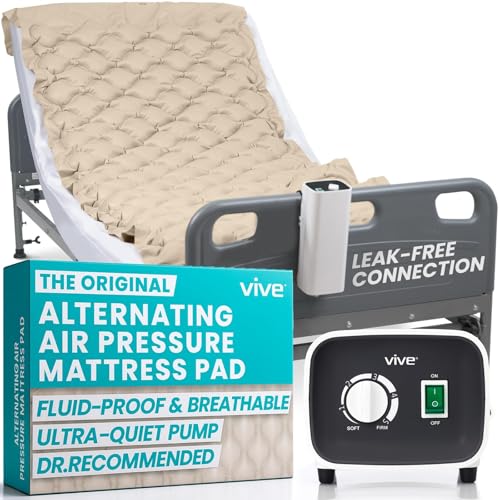
The Vive mattress pad uses a 130-cell design that alternately inflates and deflates to distribute weight evenly and reduce pressure points. This system aims to prevent bed sores and improve circulation for bedridden patients who struggle to shift their weight. The surface is engineered to minimize skin maceration by avoiding prolonged moisture exposure, and each air cell is heat sealed for durability.
Its advanced wave-like therapy supports dynamic pressure redistribution, while the whisper-quiet pump operates at around 22 dBA, offering a tranquil sleeping environment. The pump provides multiple pressure levels, allowing caregivers to tailor firmness and cycle duration to patient needs. The six-minute cycle strikes a balance between effective pressure relief and user comfort.
Kekoy Alternating Air Pressure Mattress Pad (Blue)

The Kekoy mattress arrives compactly and expands to 75″ x 36″ after inflation, featuring breathable micro air vents to promote a cool, dry sleep. Its 130 air cells deliver consistent pressure relief, with a cycle every 10-12 minutes that targets body areas to prevent pressure buildup and boost circulation. The customizable pump offers five pressure modes, from firmer to softer settings, to fit different patients’ comfort levels. A gentle upward wave provides localized massage, reducing skin damage risk.
Drive Medical 14027 Med-Aire System

The Drive Medical Med-Aire system combines alternating pressure and low-air-loss for comprehensive pressure redistribution and microclimate control. With 20 individual cells, the system ensures maximum immersion and even distribution of weight. It also includes a pillow feature to improve head stability. The durable, fluid-resistant cover helps protect the skin from moisture and friction, making it suitable for long-term bed rest in hospital or home settings.
Lunderg Alternating Air Pressure Mattress Pad
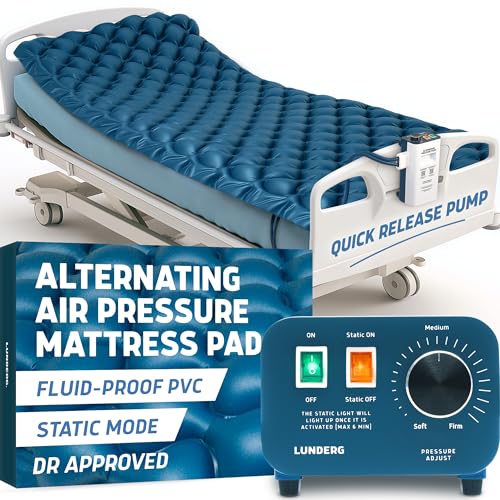
Designed for both hospital and home beds, Lunderg’s system relieves pressure on skin and bony areas while improving circulation. It includes a quiet pump with Static Mode and quick connector options. Static Mode dispenses with alternating cycles for steady support, which some patients find more restful. The mattress supports up to 300 pounds, making it suitable for a wide range of patients and care environments.
MedVance Premium Alternating Air Pressure Mattress Pad

The MedVance system features an ultra-quiet pump, operating below 20 dB, with dual pump cores and a digital control for easy customization. Its two-channel alternating mode cycles every six minutes, designed to support the body while reducing stress on joints and pressure points. The combination of quiet operation and effective pressure relief makes it a solid choice for at-home care and hospital settings alike.
Medical King Alternating Air Pressure Mattress Pad

Note: This option emphasizes a balance of comfort and pressure relief with a 130-cell configuration and a quiet pump. The system delivers wave-like cycles every 10-12 minutes and offers five pressure levels to accommodate different patient needs. Suitable for hospital or home use, it aims to reduce bed sore risk while supporting a restful night’s sleep.
Buying Guide: Key Considerations And Comparisons
When choosing an air pressure mattress for a hospital bed, several factors influence effectiveness and user satisfaction. Consider patient mobility, bed size, and the risk level of pressure ulcers. The following perspectives help clarify choices:
- Pressure distribution and cell count: More air cells generally provide finer pressure distribution and improved immersion. Look for systems with 130 or close to 130 cells for thorough coverage.
- Pump quietness and modes: A low-noise pump (under 30 dBA) supports uninterrupted sleep. Multiple pressure modes and a static option offer flexibility for changing care needs.
- Durability and cover material: Heat-sealed cells and fluid-resistant, low-friction covers reduce wear and moisture-related skin issues, extending product life in long-term care use.
- Cycle duration: Shorter or longer cycles affect feel and relief. Typical cycles range from 6 to 12 minutes; clinicians sometimes prefer variable cycles based on patient comfort and healing stage.
- Weight capacity and installation: Ensure the mattress supports the patient’s weight and fits your hospital bed dimensions. Some models offer flexible sizing to accommodate home or institutional beds.
- Maintenance and care: Look for washable covers and components designed for easy cleaning. Durability and warranty are important for ongoing dependability.
All five featured products focus on clinically relevant features: pressure redistribution, user comfort, and quiet operation. For homes with limited space or caregivers seeking a balance of price and performance, these options provide credible, non-opinionated benchmarks.