Choosing an air pressure mattress can significantly affect comfort, skin health, and overall healing for bedridden individuals. The following selections emphasize alternating pressure technology, low-noise pumps, breathable fabrics, and customized firmness to reduce pressure points and promote better circulation. This guide highlights five top-rated options and what to consider when evaluating them for home or facility use.
| Product | Brand | Notes |
|---|---|---|
| Vive Alternating Air Pressure Mattress Pad | Vive | Original bed sore prevention solution with whisper-quiet pump |
| Kekoy Alternating Air Pressure Mattress Pad (Blue) | Kekoy | Heat-resistant ulcer cushion; 5 adjustable modes |
| Drive Medical 14027 Med-Aire System | Drive Medical | 20 replaceable bladders; low friction fabric |
| Kekoy Alternating Air Pressure Mattress Pad (Beige) | Kekoy | Silent pump; 5 pressure modes; 130 air cells |
| Lunderg Alternating Air Pressure Mattress Pad | Lunderg | Static mode option; doctor & therapist approved |
Vive Original Alternating Pressure Mattress Pad
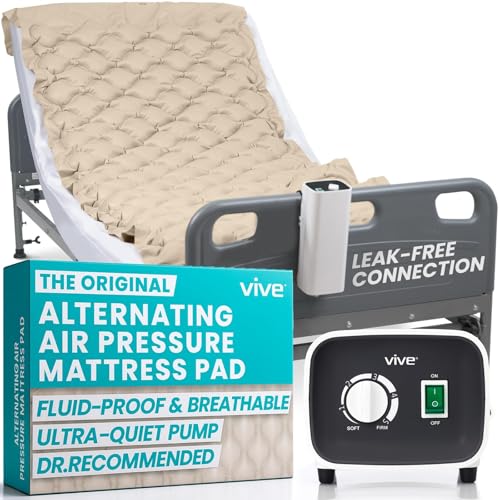
The Vive Alternating Air Pressure Mattress Pad provides doctor-recommended relief for bed sores and ulcers. Its 130 air cells are managed by a proprietary wave-like algorithm that alternately inflates and deflates to distribute weight evenly, helping prevent prolonged pressure on any one area. The whisper-quiet pump operates at approx. 22 dBA, offering customizable pressure levels and a six-minute cycle for continuous, gentle adjustments. This option is designed for immobilized patients who cannot shift position regularly and emphasizes durability with heat-sealed air cells to prevent leaks.
Kekoy Blue Alternating Mattress Pad

The Kekoy Blue alternating mattress pad features 130 air cells and an ergonomic curve to enhance comfort for elderly or recovering patients. It includes breathable micro-air vents, a wave-like 10–12 minute cycling motion for targeted massage, and a five-mode adjustable pump that ranges from firm to soft. An integrated, quiet operation helps reduce nighttime disturbances, while the heat-resistant ulcer cushion pad adds durable protection against skin damage for at-home or hospital bed use.
Drive Medical Med-Aire Low Air Loss System

The Drive Medical Med-Aire system combines alternating pressure with low air loss to maximize pressure redistribution, reduce shear, and manage microclimate around the patient. It utilises 20 individually replaceable 8-inch bladders to maximize immersion and support, and includes a head pillow feature for stability. A durable, fluid-resistant PU cover helps protect the skin from moisture and friction, making this a strong option for longer-term bed care environments.
Kekoy Beige Alternating Mattress Pad

This Kekoy beige model mirrors the blue variant with 130 air cells and a 75″ x 35″ profile, designed for hospital bed or home use. It emphasizes a quiet aluminum pump with performance under 28 dBA, five adjustable modes, and cyclic gentle waves every 10–12 minutes to massage various body areas. The system aims to prevent pressure sores by distributing load, while the silent operation minimizes sleep disruption and supports long-term care scenarios.
Lunderg Quiet Pump Mattress Pad
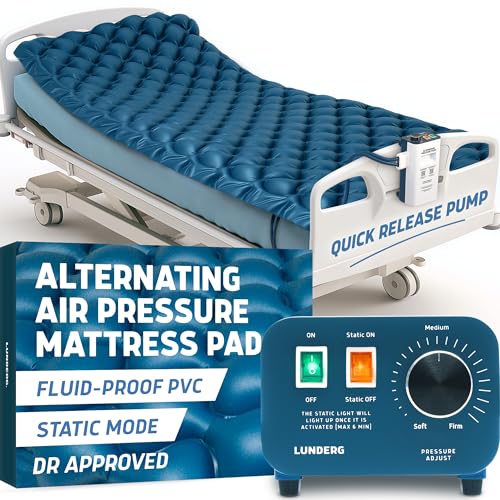
Doctor and therapist approved, Lunderg’s air mattress uses alternating pressure to relieve skin pressure and improve circulation, reducing turning frequency. A notable feature is the static mode, letting all cells stay inflated for a stable surface when desired. The system supports up to 300 pounds, making it suitable for home, hospital, or nursing facility use. The combination of dynamic cycling and static options provides flexible care for varying patient needs.
Buying Guide: Key Purchase Considerations And Comparisons
- Pressure cycling pattern: Most systems use alternating inflation/deflation to relieve pressure. Some offer wave-like cycles for targeted massage, while others include a static mode for stability during rest.
- Pump noise and efficiency: Quiet pumps (under 30 dBA) reduce sleep disruption and are preferable for overnight use. Look for aluminum motor construction for durability and lower noise.
- Cell count and distribution: Higher cell counts (e.g., 130) promote even weight distribution and reduce pressure points. Ensure the cells are heat-sealed to minimize leaks.
- Compatibility and replacement parts: If purchasing a system, check whether you get the full pad with pump or a replacement pad only. Consider availability of replacement parts and ease of cleaning.
- Durability and materials: Fluid-resistant, low-friction covers protect skin moisture and reduce shear. Look for PU covers that are easy to clean and hypoallergenic.
- Size and fit: Mattress pads come in various dimensions (often around 75″ x 35″ to 75″ x 36″). Match the size to the patient’s bed and mobility needs.
- Weight capacity: Some models support heavier patients (up to 300 lbs). Verify weight limits to ensure safe usage over time.
- Ease of use and setup: Five adjustable pressure modes and clear inflation/deflation cycles simplify caregiver use. Compact packaging is a plus for smaller spaces.
- Warranty and support: Check product warranties and whether customer support provides replacement parts or pumps as part of the package.
- Clinical alignment: Models marketed for bed sore prevention often reference doctor or therapist approval. Consider products with medical endorsements when selecting for long-term care.